Our Form 8 pupils led a rather moving Remembrance Assembly this week, using the poetry of the First World War to take us on a journey from the patriotic bravado of 1914 to increased disillusionment and pity of war expressed so powerfully by Wilfred Owen and his contemporaries in 1918. Some of the most famous poetry ever written, taking us from the early romantic notions of glory, honour and adventure before giving way to a far more uncomfortable understanding of suffering, sacrifice and the humanity of those on both sides of the trenches.
Many of these poets were little more than boys themselves when war broke out, belonging to the same generations as our Packwoodians who stood in front of the school on Wednesday morning. Wilfred Owen, born just down the road in Oswestry, was only 25 when he was killed, a week before the Armistice.
On Sunday, I had the privilege of preaching at the Remembrance Service in Ruyton XI Towns Parish Church, a service beautifully led by our Choirs and featuring a poignant Last Post played by Kyle. I reflected on the rather unusual history of our village which, nearly a thousand years ago, brought together eleven separate townships under one manor. Eleven communities, each with their own histories and identities, coming together. I used this to illustrate one of the great challenges of being human: learning how to live together.
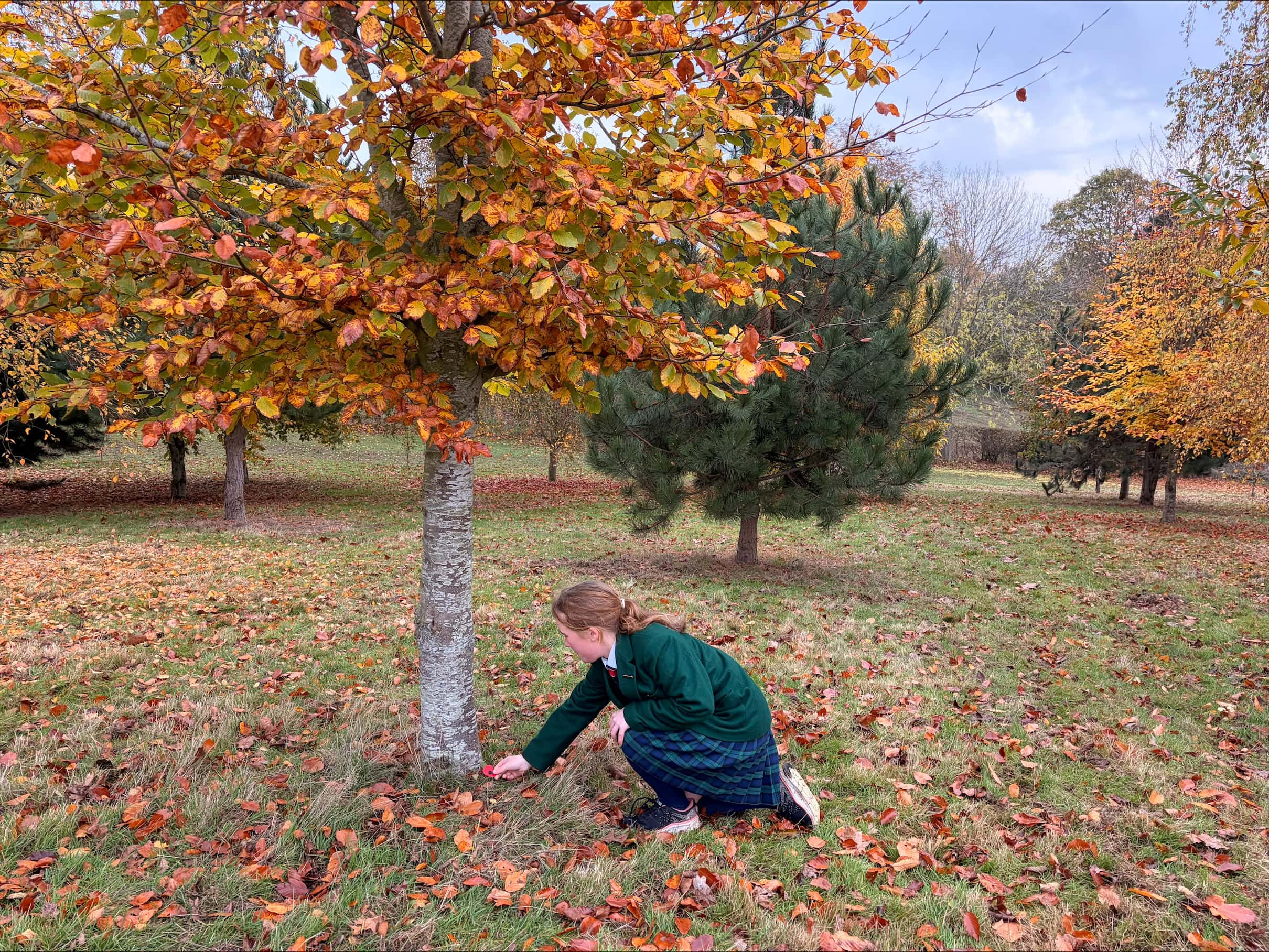
We are, as a society, rather good at finding things that divide us: different backgrounds, beliefs, generations and opinions. From powerful nations and governments to individuals, we build walls, often without even realising we are doing so. Remembrance Sunday reminds us of what can happen when those divisions become so deep that we cease to recognise what connects us. Here at Packwood, our Remembrance Copse, commemorating 48 former Packwoodians who died in World Wars I and II, provides a particularly poignant reminder of those who once enjoyed the same childhood freedoms as our pupils today.
But remembrance must be more than an exercise in looking backwards. It must also ask something of us.
For those of us working in education, Remembrance (and specifically as we observe the young observing a respectful silence) poses an important question – how do we equip children with the strength of character to face the future?
Our theme at Packwood this year is Choose Your Standard, built around four simple expectations: work hard, be kind, show manners and take responsibility. They are not particularly revolutionary, nor should they be. Rather, they are the everyday habits and choices which, collectively, shape the character of an individual and the culture of a community.
Alongside our three core values of Tenacity, Respect and Humility sit our seven Big Tree Attributes. During our two minutes’ silence on Wednesday morning, my gaze alighted on the Big Tree, standing tall and proud – lit by a glorious autumnal sunshine. I wondered how the brave soldiers, noting the poets we had just heard from, exhibted the seven attributes and how these are relevant to the Packwoodians stood in front of me.
Boldness — to persevere in the face of challenges. Wilfred Owen demonstrated considerable courage in challenging the romantic portrayal of warfare. I hope our children will have the confidence to question accepted wisdom, challenge injustice and stand up for what they believe is right. As I suggested in church, sometimes the most courageous thing we can do is listen to those with differences to ourselves.
Imagination — to engage with new ideas and think outside the box. Siegfried Sassoon’s Everyone Sang, written in 1918, imagines a moment of collective freedom and release from suffering. We should never underestimate the capacity of young people to see possibilities which adults have long since dismissed.
Growth-mindedness — to act on feedback. In Owen’s Strange Meeting, two soldiers from opposing sides encounter one another beyond the battlefield, recognising something of their shared humanity. Children are often rather better than adults at forgiving, making up and beginning again. My hope is that they retain this capacity to recognise mistakes, listen to others and, perhaps most importantly, change their minds.
Teamwork — to collaborate with others to solve problems. The history of Ruyton XI Towns reminds us that communities are built when people find ways to come together. The greatest challenges facing the next generation will surely demand cooperation across borders, cultures and beliefs. We need young people who understand that achievement is not simply about what they accomplish themselves, but what they enable others to achieve.
Resourcefulness — to be entrepreneurial. Just outside Ruyton Parish Church stand the remains of a medieval castle, built to defend this part of the Welsh Marches. When it eventually fell into ruin, some of its stones were used to build the church itself. Stones once used to construct a fortress against enemies became part of a place where neighbours could gather in peace. I cannot think of a better metaphor for resourcefulness: taking what we have inherited and finding a better purpose for it.
Empathy — towards others and stewardship of the natural world. In Isaac Rosenberg’s Break of Day in the Trenches, a rat moves freely between the opposing trenches, oblivious to the national divisions which have brought such destruction. There is something wonderfully simple, and rather uncomfortable, about that image. Empathy requires us to look beyond our own experiences, recognise the humanity of others and understand our responsibility for the world around us. Kindness, after all, is something we choose to do.
Excellence — to be your best self. Returning to Strange Meeting, Owen reflects on the wisdom, creativity and potential lost to war. It is a reminder of the extraordinary possibilities contained within every human life. Of course, academic results, scholarships and personal achievements matter enormously, but I hope our children will ultimately measure success by something more: whether they have used their talents for good and made a worthwhile contribution to the lives of others.
At Packwood, we talk a great deal about providing a busy, unhurried childhood. This is not about delaying the responsibilities of growing up, but recognising that childhood is when so much of our character is formed: through friendships, disagreements, small acts of kindness, the courage to try again and the discovery that we belong to something greater than ourselves.
The poets of the First World War left us an extraordinary (and tragic) legacy, but they also remind us of the enormous human potential. It was in this spirit that I ended my sermon on Sunday with a prayer that we might look backwards with respect, forwards with tenacious courage and upwards with humility.